
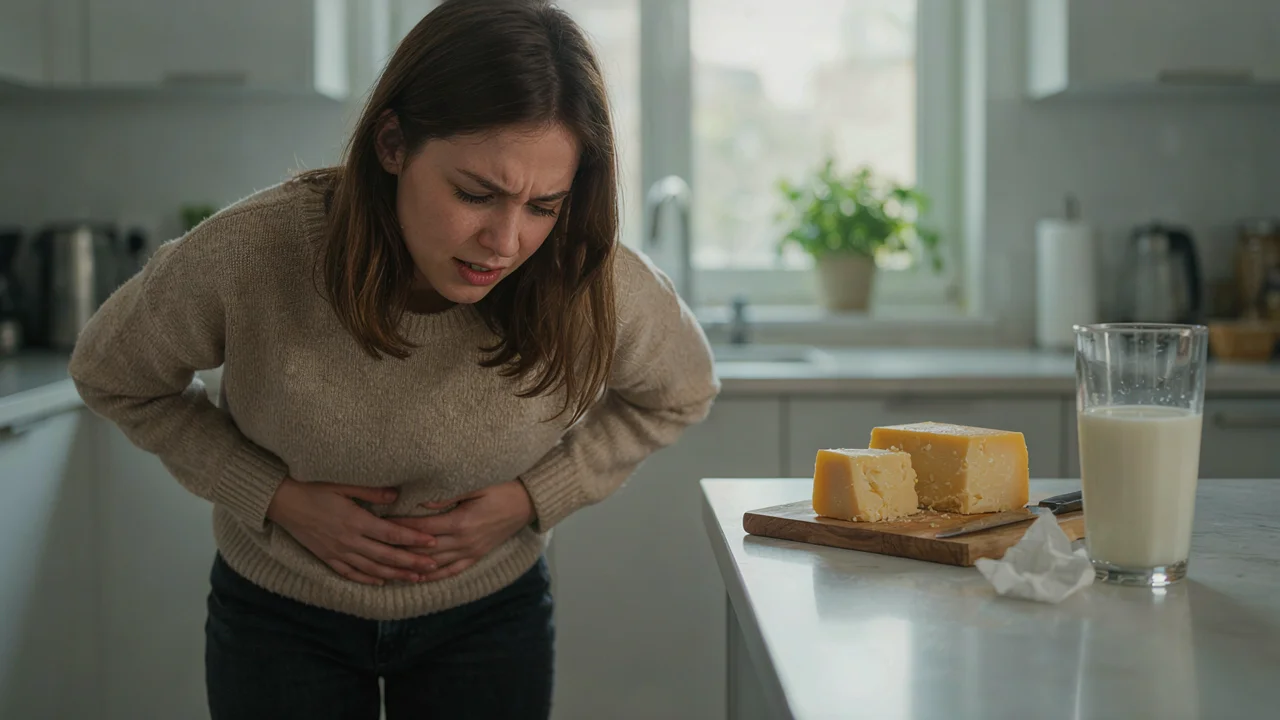
Stomach Pain After Eating Cheese but Not Milk: Causes, Mechanisms & What It Means
Quick Answer (TL;DR): If you tolerate milk but experience stomach pain after eating cheese, lactose intolerance is usually not the culprit (since cheese contains significantly less lactose than milk). Instead, the most common causes are high dietary fat content (which delays gastric emptying and triggers gallbladder/reflux issues), concentrated milk proteins (casein), high histamine/tyramine levels in aged cheeses, or added additives/spices.
Medically reviewed and updated for clinical accuracy.
It can seem paradoxical to drink a glass of liquid milk without issue yet end up with severe abdominal cramps or indigestion after a few slices of cheese.
Because milk and cheese are both dairy products, many assume any adverse reaction to cheese indicates lactose intolerance. However, the cheesemaking process fundamentally alters the biochemical profile of dairy—concentrating fats and proteins while discarding most of the liquid whey and lactose sugar.
The Biochemical Contrast: Cheese vs. Milk
To understand why your stomach reacts to cheese but tolerates milk, compare how their nutrient profiles differ per 100 grams:
-
Lactose Partitioning: During cheesemaking, milk is curdled using rennet or acid. The liquid portion (whey), which contains almost all of milk’s natural lactose sugar, is drained away. Hard aged cheeses (like Cheddar, Swiss, and Parmesan) contain less than 1 gram of lactose per serving, whereas a cup of milk contains 12 to 13 grams.
-
Lipid Concentration: Whole fluid milk is approximately 87% water and only 3.25% fat. Cheese, by contrast, drops most water weight, resulting in a dense food product containing up to 30% to 35% saturated fat by weight.
-
Protein Density (Casein Curd): Cheese is essentially a concentrated block of casein protein coagulated into a dense matrix that requires far more stomach acid and enzymatic effort to break down than liquid milk.
5 Primary Causes of Cheese-Specific Stomach Pain
| Condition | Primary Trigger | Gastrointestinal Mechanism | Key Distinguishing Symptoms |
| Delayed Gastric Emptying / Fat Intolerance | High saturated fat load | Fat triggers Cholecystokinin (CCK) release, slowing stomach motility and increasing antral pressure | Heavy epigastric fullness, nausea, bloating, upper stomach aching |
| Gallbladder / Biliary Dyskinesia | Saturated fats | CCK forces the gallbladder to contract forcefully; if gallstones or dyskinesia are present, pain occurs | Sharp Right Upper Quadrant (RUQ) pain radiating to back or right shoulder blade |
| GERD & Acid Reflux | High-fat cheese varieties | High fat relaxes the Lower Esophageal Sphincter (LES), allowing acid to backflow into the esophagus | Chest burning, sour regurgitation, upper abdominal pain after fatty meals |
| Casein Sensitivity (Non-Allergic) | Concentrated A1 beta-casein | Dense casein curds form hard-to-digest masses in the stomach, promoting low-grade inflammation | Dull lower abdominal cramping, constipation, severe gas without hives/swelling |
| Histamine / Tyramine Intolerance | Aged cheeses (Parmesan, Gouda, Blue) | Aged cheeses contain biogenic amines that trigger mast cell activation or vascular headaches if amine-degrading enzymes are low | Abdominal cramps alongside facial flushing, headache, or nasal congestion |
Clinical Diagnostic Flowchart
           [STOMACH PAIN AFTER CHEESE BUT NOT MILK?]
                               │
       ┌───────────────────────┴───────────────────────┐
       ▼                                               ▼
Occurs primarily with AGED cheeses           Occurs with ALL HIGH-FAT cheeses
(Cheddar, Parmesan, Blue)?                   (Brie, Mozzarella, Cream Cheese)?
       │                                               │
       ├─► Accompanying headache / flushing?          ├─► Pain located in upper right abdomen?
       │   └─► Suspect HISTAMINE INTOLERANCE          │   └─► Suspect GALLBLADDER / BILIARY ISSUE
       │                                              │
       └─► Dull lower abdominal cramps?               └─► Heavy fullness & reflux?
           └─► Suspect CASEIN SENSITIVITY                 └─► Suspect FAT-INDUCED INDIGESTION / GERD
Red Flags: When to Seek Immediate Medical Evaluation
Seek emergency medical attention if your stomach pain after eating cheese is accompanied by any of the following symptoms:
-
Signs of a Severe Allergic Reaction (Anaphylaxis): Swelling of the lips, tongue, or throat; hives; wheezing or difficulty breathing; dizziness; or rapid drop in blood pressure.
-
Severe, Sudden Right Upper Quadrant Pain: Intolerable pain in the upper right side of your abdomen that lasts for hours, accompanied by fever or chills (indicating acute cholecystitis).
-
Vomiting Blood or Black Stools: Gastrointestinal bleeding signs such as dark, tarry stools or vomiting material that resembles coffee grounds.
-
Unexplained, Rapid Weight Loss: Involuntary weight loss alongside chronic abdominal discomfort.
Action Plan: Identifying and Managing Your Trigger
1. Execute a Cheese Categorization Trial
Instead of eliminating all dairy, test specific cheese sub-categories to isolate your exact mechanical trigger:
-
Test Aged vs. Fresh: Compare aged Cheddar (virtually zero lactose, high fat, high histamine) against fresh Ricotta or Cottage Cheese (moderate lactose, lower fat, zero histamine).
-
Test High-Fat vs. Reduced-Fat: Compare standard whole-milk Mozzarella against part-skim or fat-free varieties to confirm if lipids are driving your symptoms.
2. Digestive Behavioral Adjustments
-
Limit Portion Sizes: Restrict high-fat cheese portions to 1 ounce (30 grams) per meal to avoid overwhelming biliary and gastric capacity.
-
Avoid Pairing with Other Heavy Fats: Do not combine high-fat cheese with deep-fried foods, heavy red meats, or alcohol, which compounds LES relaxation and slows gastric emptying.
-
Use Digestive Enzyme Support: If fat digestion is sluggish, discuss broad-spectrum lipase supplements or ox bile extract with your healthcare provider.
Frequently Asked Questions (FAQ)
Can you be allergic to cheese but not milk?
An IgE-mediated allergy to dairy proteins (like casein or whey) will typically apply to both milk and cheese. However, processing can alter protein structures, and aged cheeses contain biogenic amines (like histamine) that mimic allergic reactions (pseudo-allergies) without involving IgE antibodies.
Why does melted cheese bother my stomach more than cold cheese?
Melted cheese often separates into free-floating liquid fats and dense protein strands. This concentration of free oil can trigger faster CCK release and more immediate reflux or gallbladder distress than cold cheese consumed in solid form.
Why can I eat yogurt without pain if cheese hurts my stomach?
Yogurt has a lower fat density than hard cheeses and contains live probiotic cultures (Lactobacillus species) that actively assist in pre-digesting proteins and carbohydrates in the gut.
Medical Disclaimer: This article is for educational purposes only and should not replace professional medical advice, diagnosis, or treatment. Always consult a qualified physician or gastroenterologist regarding persistent abdominal pain or suspected food intolerances.
Read More:
Can Avocados Give You Diarrhea? Causes, Symptoms & Treatment
Leave a Reply