
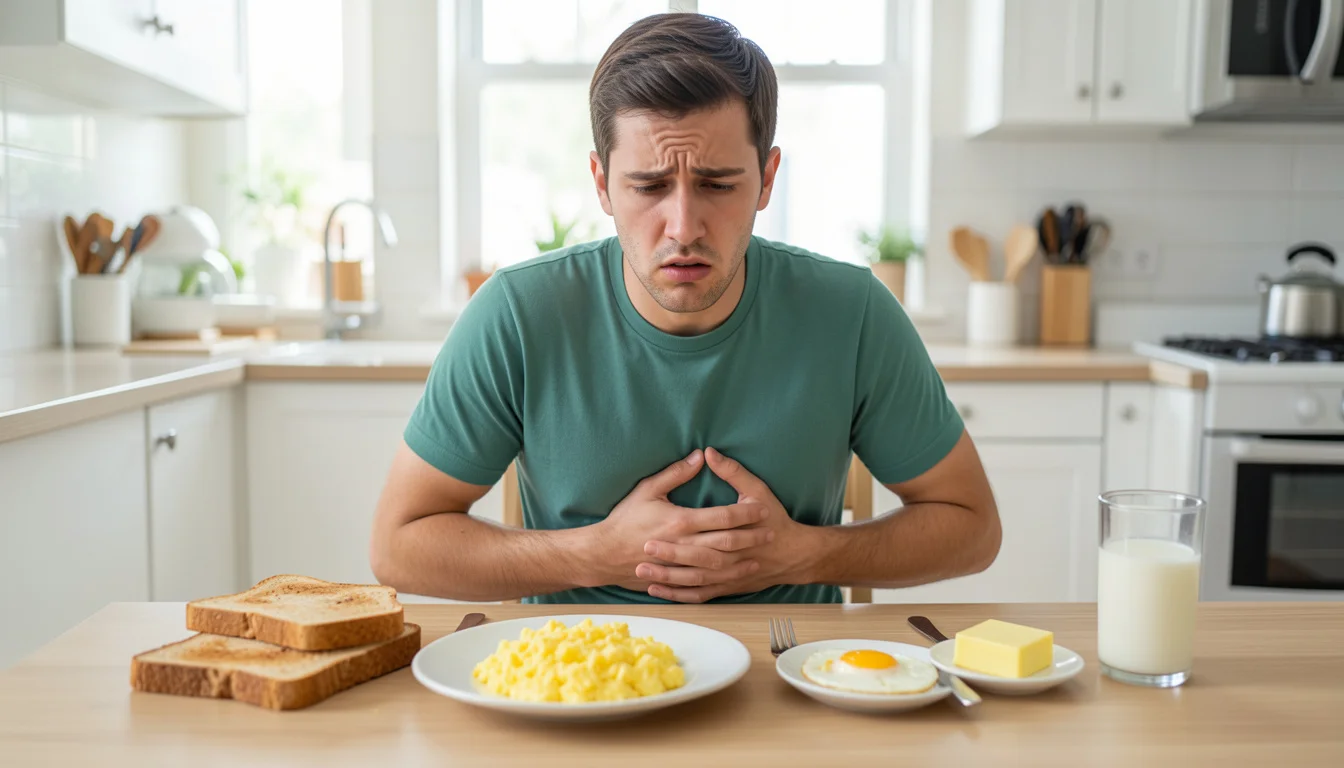
Why Do Scrambled Eggs Hurt My Stomach but Not Fried? Causes, Symptoms, and What It Means
Quick Answer (TL;DR): If scrambled eggs trigger stomach pain while fried eggs do not, the issue is usually added dairy (lactose) in scrambled preparations, higher cooking fat/butter levels delaying stomach emptying, denaturation differences (runny/soft scrambled egg proteins digest differently than set whites), or co-ingested seasonings.
Medically reviewed and updated for accuracy.
It can be confusing to experience nausea, cramps, or bloating after eating scrambled eggs when you can eat fried eggs without issue. Because both preparations start with the same basic food, this difference often comes down to added ingredients, lipid (fat) load, protein denaturation during cooking, and gastric motility.
Understanding these physiological triggers helps clarify whether the issue stems from the egg itself or the way it is prepared.
Why Scrambled and Fried Eggs Digest Differently
Cooking alters the physical structure and nutrient availability of food. While a fried egg typically involves cooking an intact egg directly in a pan, scrambled eggs undergo mechanical whisking and often incorporate liquid additives, changing how the stomach breaks them down.
Primary Associated Symptoms
-
Upper abdominal pressure or deep cramping
-
Post-meal nausea or sudden stomach heaviness
-
Abdominal distension and excess gas
-
Acid reflux or sour belching
-
Rapid transit or loose stools shortly after eating
6 Clinical Reasons Scrambled Eggs Upset Your Stomach
1. Hidden Lactose and Dairy Proteins
The most common cause of preparation-specific stomach pain is added dairy. Scrambled eggs—especially those prepared at restaurants, diners, or from pre-mixed recipes—frequently incorporate whole milk, heavy cream, half-and-half, or melted cheese to achieve a soft, fluffy texture.
If you have underlying lactose intolerance or a sensitivity to milk proteins (whey and casein), the added dairy will trigger osmotic fluid shifts, bacterial fermentation, and sharp intestinal gas within 30 to 120 minutes. Fried eggs rarely include liquid dairy additions.
2. Higher Total Lipid Load and Cholecystokinin (CCK) Release
Scrambled eggs absorb cooking fats like a sponge. When eggs are whisked and cooked, melted butter, oil, or margarine becomes thoroughly emulsified throughout the entire curd structure.
High-fat meals trigger the release of cholecystokinin (CCK), a hormone that:
-
Slows Gastric Emptying: Keeps food in the stomach longer, causing heavy fullness, indigestion, or nausea.
-
Triggers Gallbladder Contraction: If you have underlying gallstones or gallbladder sluggishness, a high-fat intake can cause upper right quadrant abdominal pain.
-
Relaxes the Lower Esophageal Sphincter (LES): Increases the likelihood of acid reflux and heartburn.
In contrast, a fried egg often leaves excess cooking fat behind in the pan, resulting in a lower overall fat payload per bite.
3. Protein Structure & Degree of Denaturation
Heat breaks the hydrogen bonds in egg proteins (ovalbumin and ovomucoid), a process known as denaturation. Fully set, denatured proteins are easier for stomach enzymes like pepsin to break down.
-
Soft/Runny Scrambled Eggs: Often cooked quickly over low heat, leaving proteins partially folded and holding bound moisture. In sensitive stomachs, under-denatured egg proteins resist rapid enzymatic breakdown, leading to prolonged gastric irritation.
-
Fried Eggs: Typically exposed to higher direct heat, fully coagulating the egg white proteins into a matrix that gastric juices can readily break down.
4. Aerophagia from Whisking
Whisking eggs vigorously incorporates microscopic air pockets into the liquid mixture to create fluffiness. When swallowed rapidly, this trapped air introduces excess gas (aerophagia) directly into the stomach, contributing to immediate post-meal bloating, upper stomach distension, and belching.
5. Irritating Additives and Seasonings
Scrambled eggs are frequently seasoned with additives that can irritate a sensitive stomach lining (gastritis) or trigger Irritable Bowel Syndrome (IBS):
-
Garlic powder or onion powder (high-FODMAP triggers)
-
Black or white pepper (direct gastric mucosal irritants)
-
Hot sauces or pre-packaged pre-mixed liquid egg blends containing preservatives
6. Portion Size and Caloric Density
Scrambled egg dishes often use 3 to 4 eggs plus added liquids, creating a dense meal. Fried egg portions are more visible and typically consumed as 1 or 2 distinct eggs. Eating a larger volume of rich food at once places higher mechanical strain on stomach stretch receptors.
Diagnostic Breakdown: Identifying Your Specific Trigger
| Suspected Cause | Key Symptoms | Diagnostic Test / Elimination Trial |
| Lactose / Dairy Intolerance | Gas, lower abdominal cramps, watery diarrhea | Eat scrambled eggs made with zero milk/butter (use water and light olive oil). |
| Fat-Induced Delayed Emptying | Nausea, heavy upper fullness lasting hours | Compare poached eggs against scrambled eggs cooked in heavy butter. |
| Under-Cooking / Soft Proteins | Nausea specifically with creamy/soft textures | Hard-scramble eggs until completely firm and dry. |
| Gallbladder / Biliary Distress | Sharp right upper quadrant pain after fatty meals | Consult a physician for a abdominal ultrasound or HIDA scan. |
Elimination Protocol: How to Test at Home
To determine whether the issue stems from an egg intolerance or preparation method, follow this step-by-step elimination test:
[Step 1: The Plain Scramble]
Scramble 2 eggs using ONLY 1 tsp olive oil and plain water (No milk, butter, or pepper).
       │
       ├─► No Pain? ──► The culprit was added dairy, heavy butter, or seasonings.
       │
       └─► Still Hurts? ──► Proceed to Step 2.
             │
             ▼
[Step 2: The Hard-Cooked Test]
Eat 2 fully hard-boiled eggs (100% denatured protein, zero added fat).
       │
       ├─► No Pain? ──► The culprit is high-fat cooking or soft/under-cooked textures.
       │
       └─► Still Hurts? ──► Indicates a true primary egg protein intolerance.
When to Seek Medical Evaluation
While preparation-dependent stomach upset is usually benign, consult a gastroenterologist or physician if you experience:
-
Severe, sharp, or localized right upper quadrant abdominal pain.
-
Chronic diarrhea, persistent vomiting, or unexplained weight loss.
-
Blood in your stool (red or dark black, tarry stools).
-
Systemic allergic signs like hives, facial swelling, lip tingling, or difficulty breathing (seek emergency care immediately).
Frequently Asked Questions (FAQ)
Could I be allergic to scrambled eggs but not fried eggs?
No. A true IgE-mediated food allergy reacts to the proteins within the egg itself regardless of preparation. If you can safely digest fried eggs, you do not have a primary egg allergy; your reaction to scrambled eggs is driven by added ingredients, fat content, or digestion mechanics.
Why do restaurant scrambled eggs bother my stomach more than homemade ones?
Restaurants routinely add heavy cream, pancake batter (for fluffiness), or high amounts of butter/margarine to their scrambled egg mixes, alongside using pre-packaged liquid egg products with preservatives.
Does taking a lactase enzyme before eating scrambled eggs help?
If your morning stomach pain is caused by the milk, cream, or cheese added to scrambled eggs, taking a lactase enzyme supplement with your first bite can prevent lactose-related gas and cramping.
Medical Disclaimer: This article is for educational purposes only and should not replace professional medical advice, diagnosis, or treatment. Always consult a qualified healthcare provider regarding persistent GI symptoms or suspected dietary intolerances.
Read More:
How to Avoid Gas After Eating Eggs: Causes, Prevention Tips & Remedies
Leave a Reply