
Is Chest Pain from Anxiety Dangerous? Symptoms, Causes, and Medical Warning Signs
Quick Answer (TL;DR): Chest pain caused solely by anxiety or panic is physically harmless and not life-threatening. However, because anxiety-induced chest tightness can closely mimic a cardiac event (such as a heart attack or angina), new, sudden, or unexplained chest pain must always be medically evaluated by a healthcare provider to rule out underlying heart issues.
Medically reviewed and updated for accuracy.
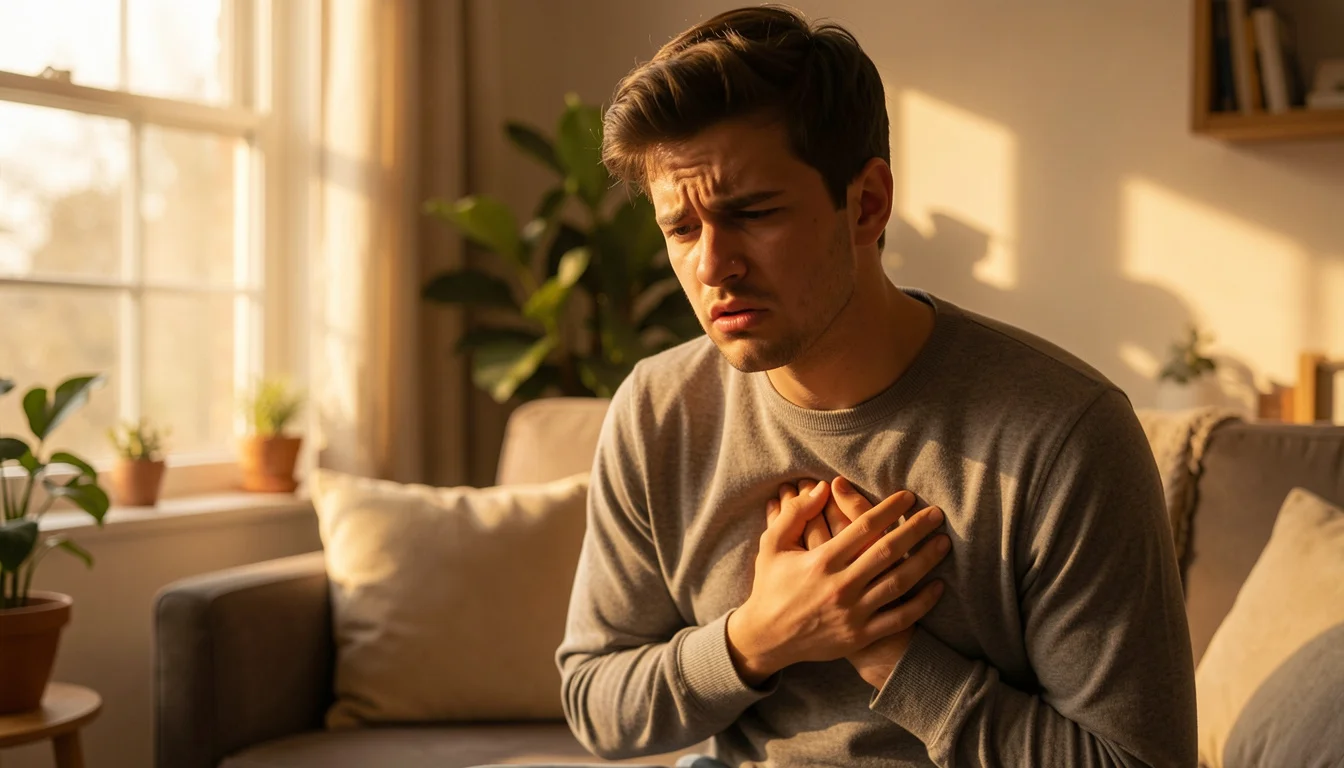
Experiencing sudden chest discomfort, tightness, or a sharp stabbing pain can be terrifying. It naturally triggers fear of a cardiac emergency, which ironically increases stress and intensifies the pain.
Anxiety and panic attacks trigger real, measurable physiological responses in the body. While the discomfort is genuine, understanding the underlying mechanisms of anxiety-induced chest pain can help you differentiate benign nervous system reactions from medical emergencies.
Can Anxiety Really Cause Chest Pain?
Yes. Anxiety is not just a mental state; it activates the sympathetic nervous system (the body’s “fight-or-flight” response).
When your brain perceives a threat—whether real or stress-induced—it floods your bloodstream with catecholamines like adrenaline (epinephrine) and cortisol. This surge triggers immediate physical changes designed to prepare your body for action:
-
Muscle tissue throughout the chest wall contracts tightly.
-
Blood vessels constrict, temporarily elevating blood pressure.
-
Heart rate speeds up dramatically (tachycardia) to pump oxygen to major muscles.
-
Breathing accelerates, often leading to rapid or shallow respiration (hyperventilation).
What Does Anxiety Chest Pain Feel Like?
Anxiety-related chest pain varies significantly between individuals and even between episodes.
Common Physical Sensations
-
Sharp, Stabbing Pain: Often localized to a specific spot over the heart or sternum, lasting just a few seconds or occurring in quick bursts.
-
Persistent Chest Tightness: A feeling like a band is squeezing around the rib cage or a heavy weight is sitting on the chest.
-
Muscle Soreness: A dull ache across the pectoral muscles that feels tender when pressed.
-
Heart Palpitations: Sensations of a racing, pounding, or fluttering heart, sometimes accompanied by skipped beats.
-
Shortness of Breath: Feeling unable to catch a full breath, leading to lightheadedness or tingling in the fingers and lips.
5 Clinical Causes of Anxiety-Induced Chest Pain
1. Intercostal Muscle Tension
During high-stress states, the intercostal muscles (the tiny muscles between your ribs) and pectoral muscles contract involuntarily. Sustained muscle tension leads to localized muscle fatigue, inflammation, and sharp, stabbing chest pain—a condition similar to costochondritis.
2. Hyperventilation and Respiratory Alkalosis
When anxious, people often over-breathe without realizing it, exhaling too much carbon dioxide ($CO_2$). This causes a temporary drop in blood carbon dioxide levels (hypocapnia), altering blood $\text{pH}$ (respiratory alkalosis).
Hypocapnia leads to constriction of small blood vessels, muscle spasms in the chest wall, and tingling sensations in the hands and facial area.
3. Epinephrine-Induced Coronary Spasm
In cases of intense panic attacks, the sudden surge of adrenaline can cause minor, temporary spasms in the small blood vessels surrounding the heart. While typically benign in healthy individuals, this temporary spasm causes localized discomfort.
4. Esophageal Motility Alterations and GERD
Stress directly impacts the gut-brain axis. Anxiety can trigger esophageal spasms or worsen gastroesophageal reflux disease (GERD). Acid reflux causes a burning chest pain (heartburn) directly behind the breastbone that easily mimics heart issues.
5. Visceral Hypersensitivity
Individuals with chronic anxiety often develop visceral hypersensitivity, meaning their central nervous system amplifies normal internal sensations (like normal heart contractions or digestion) into intense pain signals.
Diagnostic Comparison: Anxiety vs. Cardiac Chest Pain
While only a medical professional can definitively diagnose the cause of chest pain using an electrocardiogram (ECG) and cardiac enzymes, comparing key features provides valuable context:
| Feature | Anxiety-Related Chest Pain | Cardiac Event (Heart Attack / Angina) |
| Pain Quality | Sharp, stabbing, or localized muscle ache | Heavy crushing pressure, squeezing, or severe fullness |
| Location | Localized to one small point; moves around | Broad central or left-sided chest; spreads to jaw, neck, back, or left arm |
| Onset Trigger | Spontaneous; during emotional stress, rest, or panic | Often triggered by physical exertion or emotional stress |
| Duration | Lasts a few seconds, or persists as a dull ache for hours/days | Starts gradually, builds, and lasts constantly for $>15\text{ minutes}$ |
| Effect of Touch | Pain is often reproducible by pressing on chest muscles | Pain is deep inside; pressing on the chest does NOT change the pain |
| Accompanying Symptoms | Hyperventilation, tingling hands, racing thoughts, trembling | Cold sweat, nausea, vomiting, severe breathlessness, lightheadedness |
RED FLAGS: When to Call Emergency Services Immediately
Never assume chest pain is just anxiety if it is brand new, unusual, or accompanied by red-flag symptoms. Call emergency services (such as 911 or local emergency care) immediately if you experience:
-
Sudden, crushing pressure, tightness, or heavy squeezing in the center of the chest.
-
Pain radiating down your left arm, into your shoulders, neck, jaw, or back.
-
Chest pain accompanied by sudden profuse cold sweating, unexplained nausea, or vomiting.
-
Severe shortness of breath, sudden extreme weakness, or feeling like you may faint/pass out.
-
Chest pain triggered directly by physical exertion (like climbing stairs) that subsides with rest.
Immediate Strategies: How to Stop Anxiety Chest Pain
If your doctor has evaluated your heart and confirmed your symptoms are anxiety-related, use these evidence-based techniques to deactivate your fight-or-flight response during an episode:
1. Practice the 4-7-8 Breathing Technique
Counteract hyperventilation and restore carbon dioxide levels to soothe intercostal muscle spasms:
-
Inhale quietly through your nose for 4 seconds.
-
Hold your breath for 7 seconds.
-
Exhale slowly and completely through your mouth for 8 seconds.
-
Repeat for 4 to 5 cycles.
2. Apply Physical Grounding (5-4-3-2-1 Method)
Engage your cerebral cortex to interrupt the brain’s fear loop:
-
Name 5 things you can see around you.
-
Name 4 things you can physically touch.
-
Name 3 things you can hear right now.
-
Name 2 things you can smell.
-
Name 1 thing you can taste.
3. Use Cold Thermic Stimulation
Splash ice-cold water on your face or place a cold ice pack on the back of your neck. This stimulates the vagus nerve, triggering the parasympathetic nervous system to slow your heart rate quickly.
Long-Term Management
If you suffer from chronic anxiety chest pain, long-term relief involves targeting the root stress response:
-
Cognitive Behavioral Therapy (CBT): The gold standard for treating health anxiety and panic disorder by retraining brain responses to physical sensations.
-
Reduce Central Nervous System Stimulants: Limit caffeine, nicotine, and alcohol, all of which lower the threshold for muscle twitching and heart palpitations.
-
Regular Aerobic Exercise: Moderate exercise burns off excess circulating adrenaline and trains the cardiovascular system to handle heart rate variations smoothly.
Frequently Asked Questions (FAQ)
Can anxiety chest pain last for days?
Yes. While a panic attack typically peaks within 10 to 20 minutes, chronic stress keeps chest muscles tight for extended periods. This persistent muscle strain can cause a continuous, dull ache or tenderness in the chest wall that lasts for days.
Can anxiety cause chest pain even when I don’t feel anxious?
Yes. Physical anxiety symptoms often operate on an unconscious level. Your body can store muscle tension or experience delayed hormone spikes even when you feel mentally calm or distracted.
Does taking an antacid help anxiety chest pain?
If your chest pain is caused by stress-induced gastroesophageal reflux (acid reflux), an antacid or H2 blocker may relieve the burning sensation behind the breastbone.
Medical Disclaimer: This article is for educational purposes only and should not replace professional medical advice, diagnosis, or treatment. Chest pain can be a sign of a life-threatening medical emergency. Always seek immediate medical evaluation for new, severe, or unexplained chest symptoms.
Read More:
How to Relieve Chest Pain from Stress
How to Know If You Have Mental Illness: Signs, Symptoms & When to Seek Help
Leave a Reply