
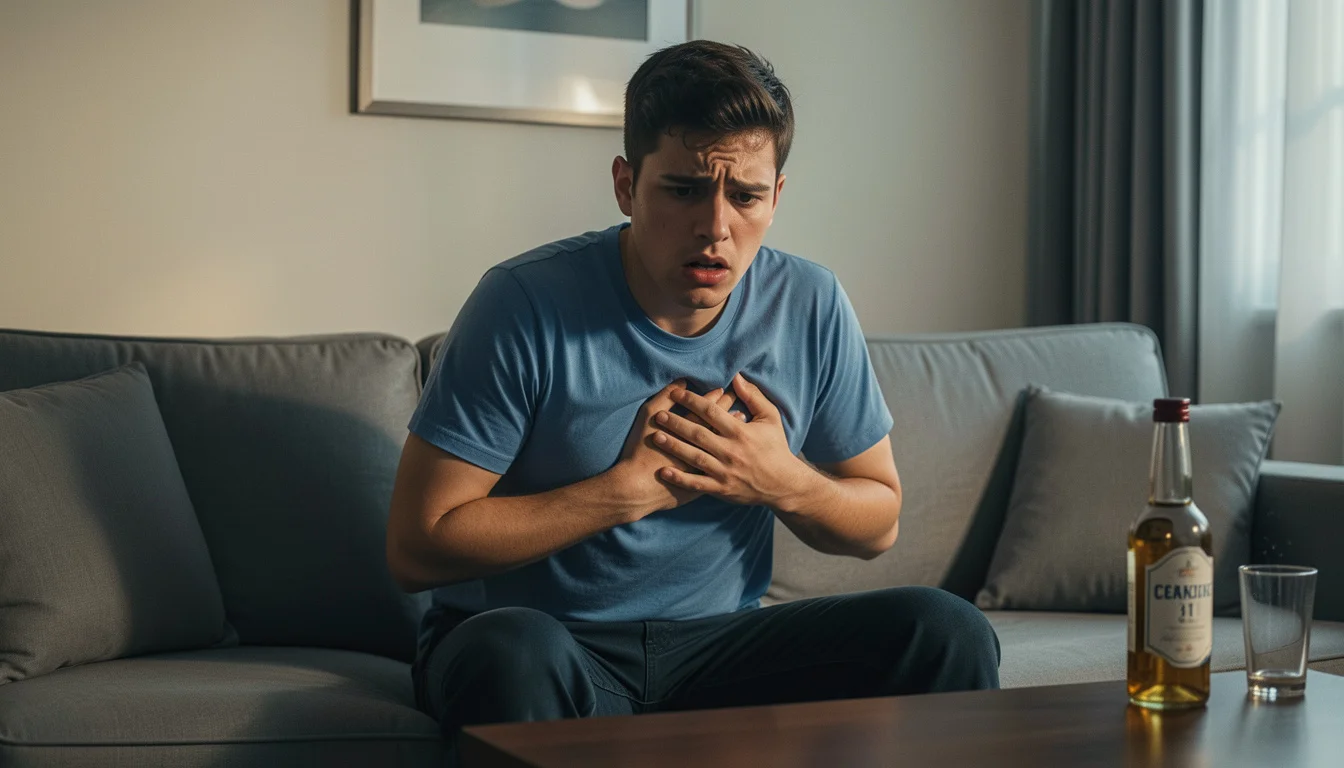
Rapid Heartbeat After Drinking Alcohol: Causes, Symptoms & When to Worry
Quick Answer (TL;DR): A rapid heartbeat after drinking alcohol is most commonly driven by sympathetic nervous system overstimulation, dehydration and electrolyte imbalance, blood vessel dilation causing reflex tachycardia, or the surge of acetaldehyde toxicity during alcohol breakdown. It can also trigger “Holiday Heart Syndrome” (alcohol-induced Atrial Fibrillation) or “Hangxiety” (hangover anxiety).
Medically reviewed and updated for accuracy.
Experiencing a fast, pounding, or irregular pulse after drinking alcohol can be alarming. Many people report feeling their heart racing late at night after drinking or during a hangover the following morning.
While an occasional minor spike in heart rate can stem from temporary dehydration, heavy or repeated episodes of post-alcohol heart palpitations should never be ignored. Alcohol exerts direct physiological effects on heart muscle tissue, blood pressure regulation, and autonomic nervous system tone.
Why Does Alcohol Trigger a Fast Heartbeat?
Alcohol is a central nervous system depressant initially, but as blood alcohol levels peak and begin to decline, the body experiences a rebound surge in adrenaline and stress hormones. Simultaneously, alcohol alters fluid balance, arterial tone, and cardiac electrical conduction.
Primary Associated Symptoms
-
Heart fluttering, pounding, or racing (palpitations)
-
Dizziness or lightheadedness upon standing
-
Cold sweats and nighttime hot flashes
-
Feelings of dread, panic, or restlessness (“hangxiety”)
-
Extreme thirst and dry mouth
-
Trembling or shaky hands
8 Clinical Causes of Rapid Heartbeat After Alcohol
1. Autonomic Nervous System Imbalance & Adrenaline Surge
As your liver metabolizes alcohol, the parasympathetic (rest-and-digest) system activity drops, and the sympathetic (fight-or-flight) nervous system takes over. This triggers a sudden release of catecholamines—specifically epinephrine (adrenaline) and norepinephrine—which directly speeds up your heart rate and increases cardiac output.
2. Vasodilation and Reflex Tachycardia
Alcohol causes blood vessels near the surface of the skin to dilate (expand). This temporary widening of blood vessels causes systemic blood pressure to drop. In response, the body activates a compensatory mechanism called reflex tachycardia: the heart pumps faster to maintain adequate blood flow and pressure to vital organs.
3. Dehydration and Electrolyte Depletion
Alcohol suppresses antidiuretic hormone (ADH), causing the kidneys to excrete higher amounts of fluid and key minerals (potassium, magnesium, and sodium).
-
Hypokalemia & Hypomagnesemia: Depleted potassium and magnesium disrupt the electrical signals governing heart rhythm, leading to ectopic beats, fluttering, and a racing pulse.
-
Low Blood Volume: Loss of fluids reduces overall plasma volume, forcing the heart to work harder and beat faster to circulate blood.
4. Acetaldehyde Toxicity (Asian Flush Response / Alcohol Intolerance)
When alcohol is processed in the liver, it breaks down into acetaldehyde, a toxic metabolic byproduct.
Individuals with genetic variants in the ALDH2 enzyme (common in Asian populations) cannot break down acetaldehyde efficiently. Accumulation of acetaldehyde triggers massive histamine release, facial flushing, nausea, and severe, rapid heart rate spikes even after small amounts of alcohol.
5. “Holiday Heart Syndrome” (Alcohol-Induced Arrhythmia)
First identified in medical literature decades ago, Holiday Heart Syndrome refers to sudden cardiac arrhythmias—most commonly Atrial Fibrillation (AFib)—triggered by binge drinking or even moderate alcohol consumption in susceptible individuals. AFib causes the upper chambers of the heart to quiver irregularly and fast, significantly increasing stroke risk if left untreated.
6. Alcohol-Induced Anxiety (“Hangxiety”) & Panic Reactions
During alcohol consumption, GABA (calming neurotransmitter) is artificially elevated and glutamate (excitatory neurotransmitter) is suppressed. As alcohol leaves your system, the brain experiences a glutamate rebound and GABA deficit. This sudden neurochemical crash generates intense morning anxiety, panic sensations, and a surging heart rate.
7. Nocturnal Hypoglycemia (Blood Sugar Crashes)
Alcohol impairs the liver’s ability to undergo gluconeogenesis (producing new glucose). If you consume alcohol on an empty stomach or drink sugary cocktails, your blood sugar can drop drastically overnight. Hypoglycemia triggers a stress response, causing you to wake up abruptly with a racing heart, cold sweats, and shakiness.
8. Synergistic Effects with Caffeine or Nicotine
Combining alcohol with stimulants—such as energy drinks, coffee (e.g., espresso martinis), or heavy nicotine use while drinking—compounds the stress on the cardiovascular system. Caffeine hides the sedative effects of alcohol while directly stimulating the heart’s sinus node, creating an exaggerated tachycardia response.
Diagnostic Breakdown: Identifying the Underlying Mechanism
| Cause | Key Symptoms | Onset Timing | Primary Risk Factor |
| Reflex Tachycardia | Warm skin, flushing, mild fast pulse | 1 to 3 hours post-drinking | Blood vessel dilation & mild blood pressure drop |
| Dehydration / Electrolyte Loss | Dry mouth, dark urine, fluttering heart, lightheadedness | Late night or morning after | Diuretic effect & loss of potassium/magnesium |
| “Hangxiety” / Rebound | Racing thoughts, dread, trembling, fast pulse | Morning after (during hangover) | GABA depletion & glutamate rebound |
| Holiday Heart (AFib) | Irregular, erratic pulse, chest pressure, shortness of breath | During or immediately after heavy drinking | Cardiac electrical system disruption |
| Acetaldehyde Toxicity | Facial flushing, throbbing headache, immediate racing heart | 15 to 45 minutes after first drink | Genetic ALDH2 enzyme deficiency |
How to Calm a Racing Heart After Drinking
If you wake up or notice your heart racing after drinking, follow these steps to restore balance:
-
Hydrate with Electrolytes: Avoid plain water alone if you’ve been drinking heavily. Opt for an electrolyte replacement solution, coconut water, or oral rehydration salts rich in magnesium and potassium.
-
Practice Vagus Nerve Stimulation: Activate the parasympathetic nervous system using vagal maneuvers:
-
Box Breathing: Inhale for 4 seconds, hold for 4 seconds, exhale for 4 seconds, hold for 4 seconds.
-
Cold Water Splash: Splash ice-cold water on your face to trigger the “diving reflex,” which naturally slows heart rate.
-
-
Avoid Additional Stimulants: Do not drink coffee or energy drinks to cure a hangover if your heart is racing, as caffeine will exacerbate tachycardia and anxiety.
-
Eat a Complex Carbohydrate & Protein Snack: Consume whole-wheat toast with peanut butter or oatmeal to stabilize overnight blood sugar levels.
-
Rest in a Cool Room: Overheating worsens vasodilation and cardiac strain. Keep your bedroom cool and elevated.
When to Seek Immediate Medical Evaluation
While temporary sinus tachycardia from dehydration usually subsides with rest, you should seek emergency medical care (call 911 or go to the nearest ER) if your fast heartbeat is accompanied by:
-
Chest pain, tightness, or pressure spreading to the arm, jaw, or back
-
Severe shortness of breath or difficulty catching your breath
-
Fainting (syncope), sudden dizziness, or loss of consciousness
-
A heartbeat that feels completely irregular, erratic, or skips beats continuously
-
A resting heart rate exceeding 120 beats per minute that does not slow down with rest and hydration
Frequently Asked Questions (FAQ)
Why does my heart race at 3 AM after drinking alcohol?
This occurs due to the “rebound effect.” As your liver clears alcohol overnight, your body experiences a surge in adrenaline and stress hormones, coupled with dehydration and low blood sugar, which wakes you up with a fast pulse.
Can alcohol cause permanent heart damage?
Chronic heavy drinking can lead to alcoholic cardiomyopathy (weakening of the heart muscle) and persistent arrhythmias. However, occasional palpitations due to mild dehydration usually resolve once alcohol is eliminated from the system.
How long does heart racing last after drinking?
In most cases of simple dehydration or adrenaline rebound, heart rate normalizes within 2 to 12 hours as you rehydrate and alcohol leaves your bloodstream. If palpitations persist beyond 24 hours, seek medical evaluation.
Is it safe to take medicine to slow my heart rate after drinking?
Never take unprescribed heart medications, beta-blockers, or anti-anxiety drugs with alcohol. Combining substances can cause dangerous drops in blood pressure or severe drug interactions. Stick to hydration, electrolytes, and rest.
Medical Disclaimer: This article is for educational purposes only and should not replace professional medical advice, diagnosis, or treatment. Always consult a qualified healthcare provider regarding persistent cardiac symptoms or concerns about alcohol consumption.
Leave a Reply